How to determine coolant replacement and degradation?
- Share
- Issue Time
- Apr 20,2026
Short answer
Replacement is driven by water quality parameters — pH, conductivity, inhibitors and microbial levels — not by the calendar alone. Performance degradation shows up as acidic pH, conductivity surges or flocculent deposits, and the typical service cycle is 1–2 years.
- Judged by pH, conductivity, inhibitors
- Microbial levels checked as standard
- Acidic pH = warning sign
- Typical cycle: 1–2 years
Degradation indicators and what they mean
| Indicator | What it signals |
|---|---|
| Acidic pH | The coolant's corrosion protection is being consumed. |
| Conductivity surge | Dissolved solids or contamination are building up in the loop. |
| Flocculent deposits | Particulate or biological growth is present in the fluid. |
| Microbial growth | Biological contamination is established and needs treatment. |
How monitoring and replacement work together
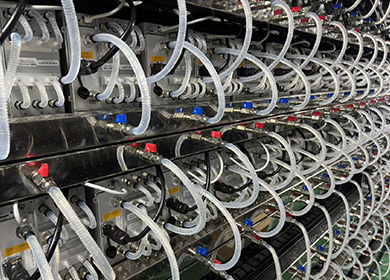
- Quality, not time, triggers replacement. Parameters are measured so the fluid is replaced when it needs it.
- Inhibitor levels are tracked. Corrosion inhibitors deplete first — that is what acidic pH reflects.
- 1–2 years is the typical cycle. A planning baseline, not a hard rule.