How does your experience in mining farm operations influence your product design?
- Share
- Issue Time
- Mar 13,2026
Short answer
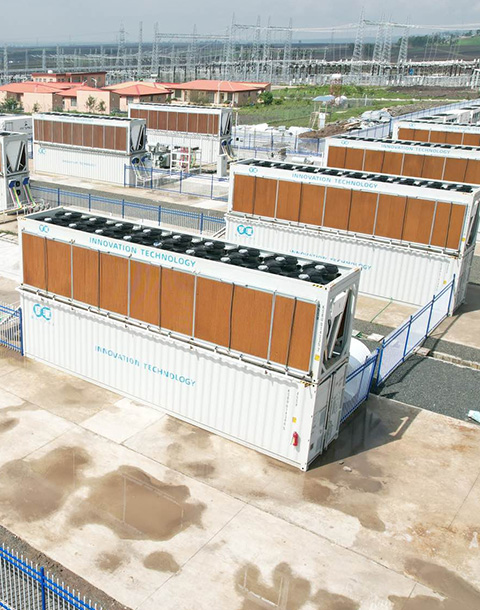
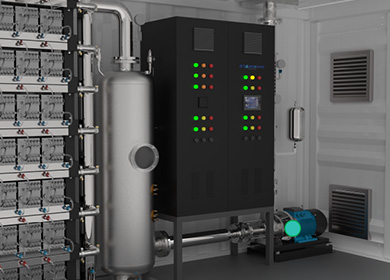
Products are engineered from the site operator's perspective. Having run large-scale compute facilities, the design priorities are industrial-grade components, N+1 redundancy in critical fluid paths, accessible manifolds and simplified maintenance — targeting high MTBF and low MTTR, because downtime hits revenue directly.
- Designed from the operator's seat
- N+1 redundancy on critical fluid paths
- Accessible manifolds for fast service
- High MTBF, low MTTR
Design decisions and the operational problems they solve
| Design decision | Operational problem it solves |
|---|---|
| Industrial-grade components | Fewer failures under 24/7 continuous full-load operation. |
| N+1 redundancy on critical fluid paths | A single pump or component failure does not force a thermal shutdown. |
| Accessible manifolds | One loop can be isolated and repaired without draining or stopping the rest of the system. |
| Simplified maintenance procedures | Smaller crews, shorter interventions, and less specialized training on site. |
| Factory pre-integration and testing | Commissioning crews arrive to a validated system instead of debugging assembly errors. |
Where this experience comes from

- Managed at scale, not just manufactured. The operating background is large-scale compute facility management.
- Downtime is treated as the real enemy. Every design review asks what a failure costs per hour.
- Feedback closes the loop. Lessons from operations flow straight back into the next design revision.