Water Usage Effectiveness (WUE) Explained
- Share
- publisher
- CoolSpace
- Issue Time
- Oct 16,2026
Summary
While PUE measures energy efficiency, Water Usage Effectiveness (WUE) measures how much water a data center consumes per kilowatt-hour of IT energy. As regulatory scrutiny intensifies and water scarcity becomes a global concern, WUE is emerging as the next critical metric for data center operators and investors.
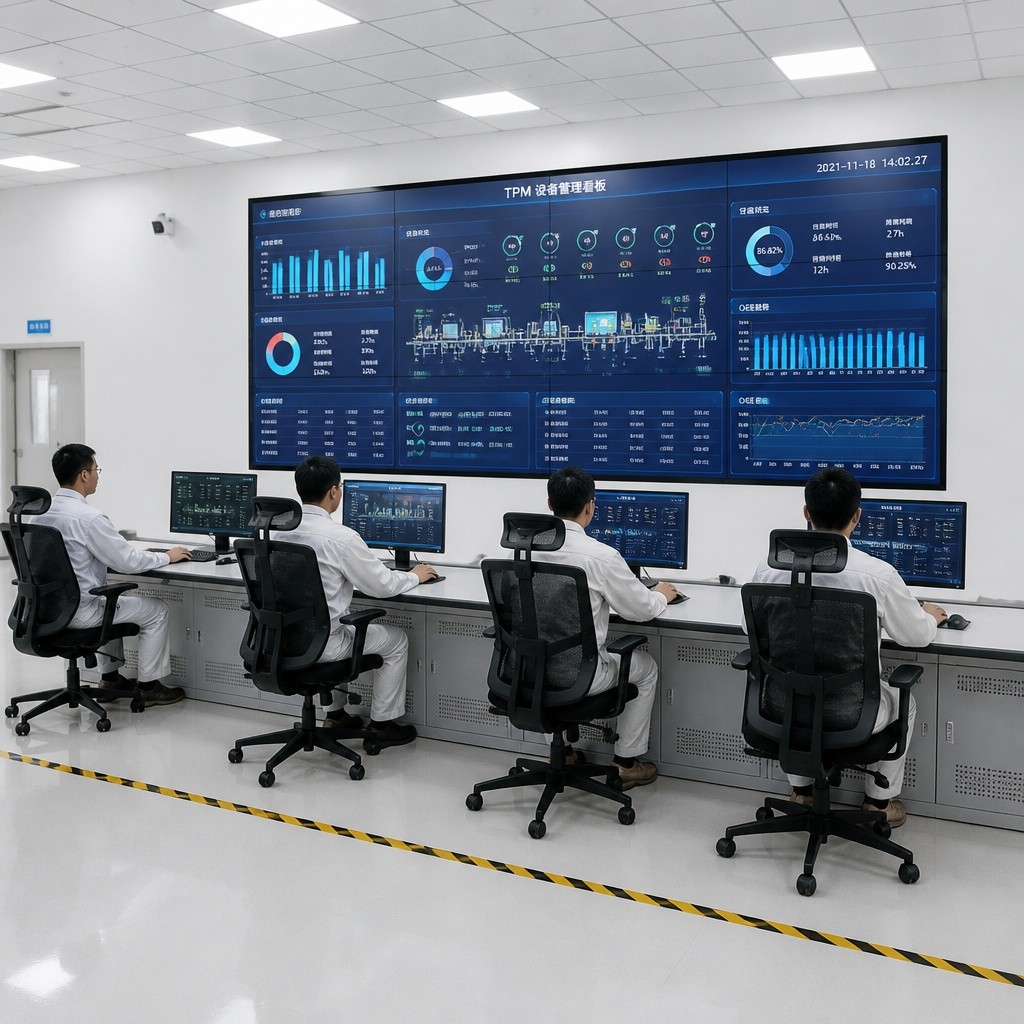
Water Usage Effectiveness: The Sustainability Metric Every Data Center Operator Should Track
Reading time: 6 min read | Published: October 16, 2026 | Category: Cooling Technology
In this article: Key Takeaways · Beyond PUE · WUE Defined · Cooling Architectures and Water Impact · The Regulatory Landscape · Closed-Loop Systems: The Zero-Consumption Approach · Explore Further
Key Takeaways
- Global data centers consumed an estimated 7.1 billion liters of water per day in 2025, with the majority used in evaporative cooling towers, according to International Energy Agency analysis.
- Water Usage Effectiveness (WUE) measures liters of water consumed per kWh of IT energy — values range from 0 L/kWh (closed-loop, zero-consumption systems) to 2.5+ L/kWh (evaporative cooling in hot climates).
- Regulatory bodies in the EU, Singapore, and several US states now require WUE disclosure as part of data center permitting and ESG reporting frameworks.
- Closed-loop hydro-cooling systems achieve a WUE of effectively zero by recirculating coolant without evaporative loss, eliminating water consumption as an operational cost and regulatory risk.
Beyond PUE: Why Energy Efficiency Is Not the Complete Picture
Power Usage Effectiveness (PUE) has been the industry's primary efficiency metric for more than a decade. It measures the ratio of total facility energy to IT equipment energy — a useful indicator of how much overhead the cooling and power distribution systems impose. A PUE of 1.2 means 20% of total energy goes to non-IT overhead.
But PUE measures only energy. It says nothing about the other critical resource many data centers consume in large quantities: water. An evaporative cooling system can deliver an excellent PUE (1.1–1.2) while consuming millions of liters of water annually. In water-stressed regions — which include many of the fastest-growing data center markets — this trade-off between energy efficiency and water consumption is increasingly untenable.
The industry needs a metric that captures this dimension, and WUE — Water Usage Effectiveness — is that metric. First defined by The Green Grid, WUE is gaining regulatory and investor traction as a required disclosure alongside PUE.
WUE Defined: What It Measures and How to Calculate It
WUE is calculated as:
WUE = Annual Water Usage (liters) ÷ Annual IT Equipment Energy (kWh)
The resulting value is expressed in liters per kilowatt-hour (L/kWh). A facility with a WUE of 1.8 L/kWh consumes 1.8 liters of water for every kilowatt-hour of IT energy delivered. For a 10MW facility operating at full load for a year (87,600 MWh), that equates to approximately 157.7 million liters — roughly 63 Olympic swimming pools.
The metric captures all water consumed by the facility's cooling systems, including evaporative losses, blowdown (water removed to manage mineral concentration), and any water used for humidification. It does not include water used for non-cooling purposes such as sanitation or landscaping.
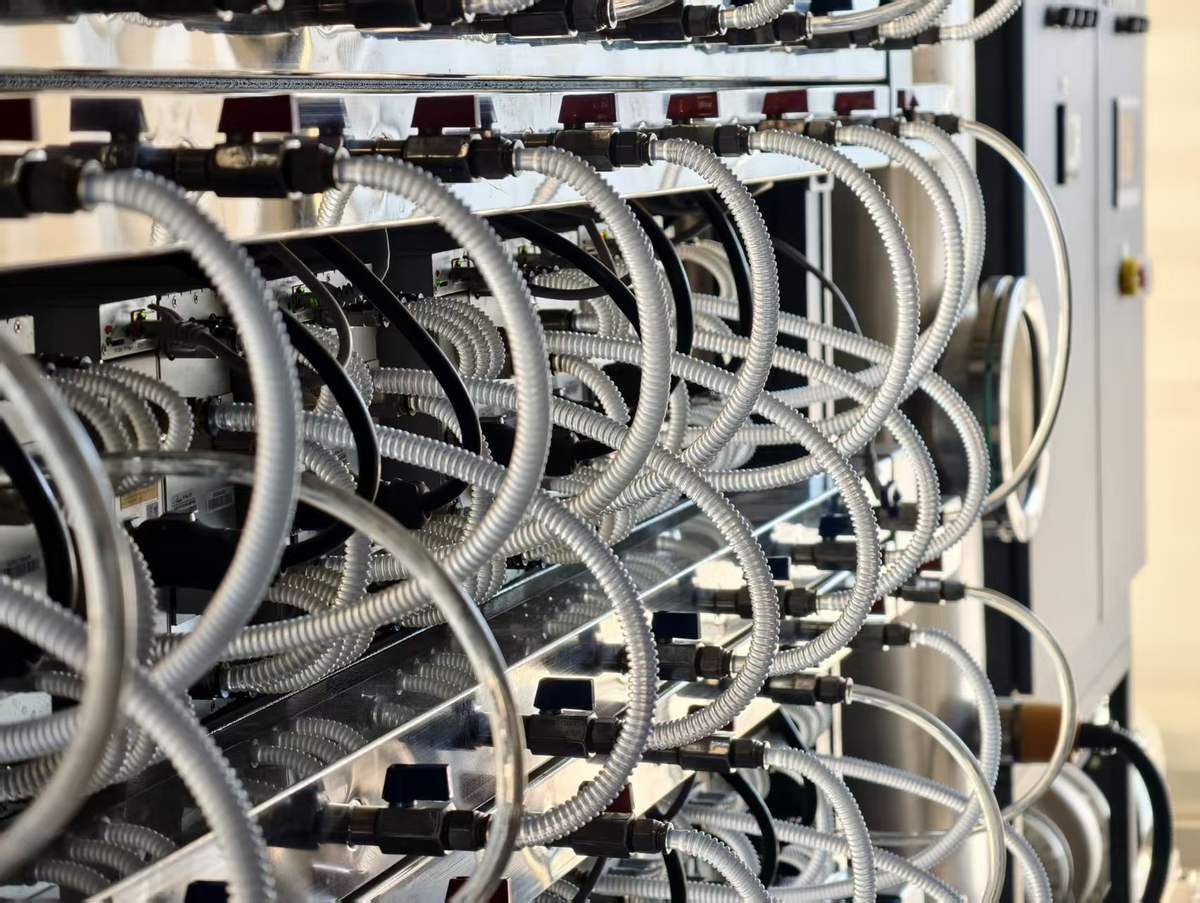
Hydro-cooling infrastructure — closed-loop systems recirculate coolant without evaporative loss, achieving a WUE of effectively zero.
Cooling Architectures and Their Water Impact
Different cooling architectures produce dramatically different WUE profiles:
Evaporative cooling towers (WUE: 1.0–2.5 L/kWh). The most common cooling approach for large-scale data centers. Water is evaporated to remove heat from condenser loops. Consumption varies with climate — hotter, drier locations consume more. The U.S. Department of Energy estimates cooling towers consume 1.8 liters of water per kWh of heat rejected.
Adiabatic cooling (WUE: 0.5–1.5 L/kWh). Water is sprayed onto heat exchanger surfaces to enhance evaporative heat transfer during peak ambient temperatures. Water consumption is lower than cooling towers but still significant during hot periods.
Air-side economization (WUE: 0–0.5 L/kWh). Uses outside air directly for cooling when ambient conditions permit. Water consumption occurs primarily during warm periods when supplemental humidification or evaporative assistance is needed. WUE depends heavily on climate — near-zero in cool climates, higher in warm ones.
Closed-loop hydro-cooling with dry coolers (WUE: ~0 L/kWh). Coolant circulates in a sealed loop from the heat source (chip cold plate or immersion tank) to dry coolers (air-to-liquid heat exchangers) that reject heat to the atmosphere without water consumption. This architecture achieves a WUE of effectively zero — no water is consumed in steady-state operation.
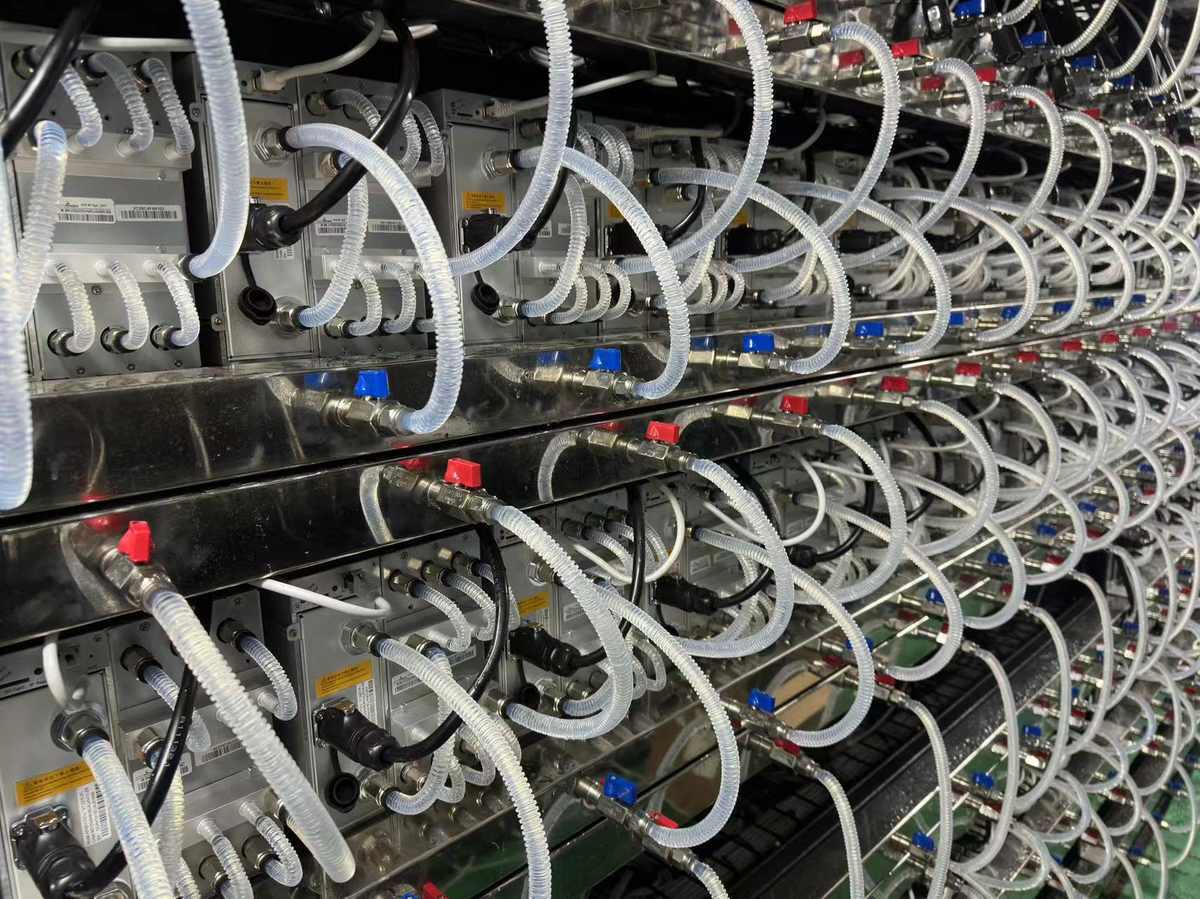
Precision-welded cooling pipe infrastructure — the backbone of a closed-loop hydro-cooling system that eliminates water consumption entirely.
The Regulatory Landscape
Water consumption by data centers is receiving increasing regulatory attention across multiple jurisdictions:
- European Union: The Energy Efficiency Directive (EED) recast requires data centers above 500kW to report WUE alongside PUE and other sustainability metrics starting in 2025. Non-compliance carries financial penalties.
- Singapore: The Infocomm Media Development Authority (IMDA) has included WUE as a criterion in its moratorium review process for new data center capacity. Applicants must demonstrate a WUE below specified thresholds to receive build approval.
- United States: Several states — including Oregon, Arizona, and Virginia — have enacted or proposed legislation requiring water impact assessments for data center developments. In Maricopa County, Arizona, water-intensive cooling designs have been cited as grounds for project denial.
- ESG frameworks: Institutional investors and rating agencies increasingly include WUE in their sustainability assessment criteria for data center operators and REITs, as noted by S&P Global ESG.
Closed-Loop Systems: The Zero-Consumption Approach
For operators seeking to eliminate water consumption entirely, closed-loop hydro-cooling with dry coolers represents the most proven approach. The system operates on a simple thermodynamic principle: heat is transferred from the IT equipment to a liquid coolant (typically water-glycol mixture), pumped through insulated piping to dry coolers mounted externally, where fans blow ambient air across finned heat exchanger surfaces to reject the heat to the atmosphere.
No water is consumed in this process. The coolant is recirculated indefinitely, requiring only periodic quality checks and occasional top-offs to compensate for minor seal losses. The system operates effectively in ambient temperatures up to 45°C and above, making it suitable for deployment in virtually any climate zone.
The trade-off is that dry coolers are less thermally efficient than evaporative systems in very hot climates, requiring more fan energy to achieve the same heat rejection. However, this incremental energy cost is typically less than the combined cost of water procurement, treatment, and disposal — and eliminates the regulatory and reputational risk associated with high water consumption.
Explore Further
CoolSpace's hydro-cooling infrastructure uses closed-loop systems with dry coolers, achieving a WUE of effectively zero across all product lines. Whether your deployment is in a water-stressed region or a jurisdiction with emerging WUE requirements, CoolSpace systems eliminate water consumption as an operational variable.
Learn more about the CoolBase-1080A/W or request a consultation to discuss how closed-loop hydro-cooling can support your sustainability and compliance goals.
Follow CoolSpace: LinkedIn · News & Updates