NVIDIA China Developer Day 2026: Takeaways for AI Infrastructure
- Share
- Issue Time
- Nov 5,2026
Summary
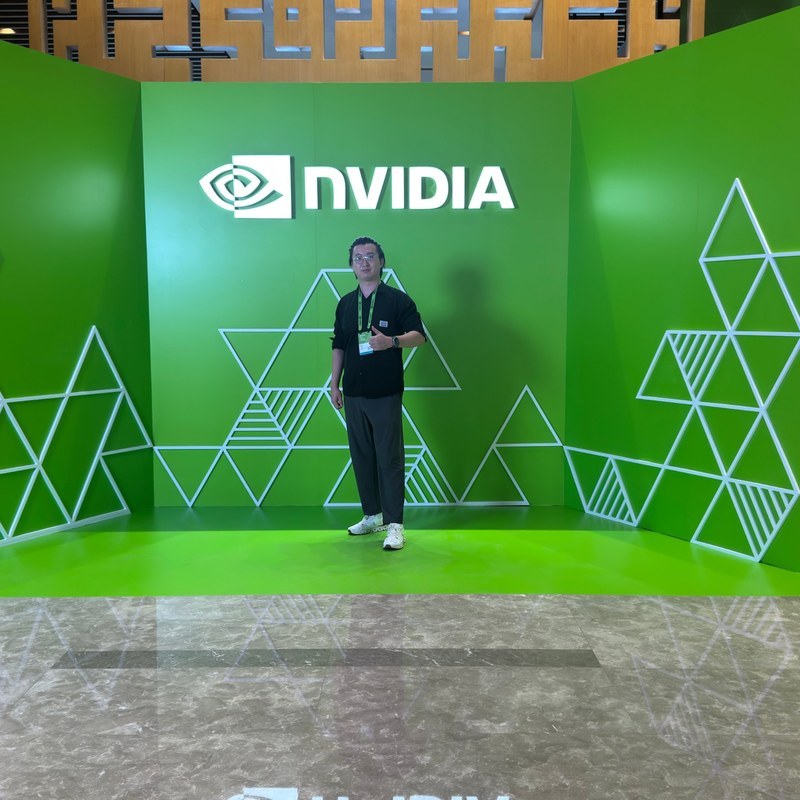
Cool Space CTO Ken Yan attended NVIDIA China Developer Day 2026 in Suzhou. Here is a recap of the training day, main forum, technical tracks and developer night, and what the event signals for AI infrastructure and liquid cooling.
6 min read | Industry Insights | Updated November 2026
Executive summary
- NVIDIA China Developer Day 2026 ran on October 15 and 16 in Suzhou, combining hands-on training, certification exams, a main forum and four technical tracks, including one on AI infrastructure.
- Cool Space CTO Ken Yan attended to stay close to where AI workloads are heading, since workload trends shape rack power, heat density and cooling design.
- Our takeaway: software and model progress keeps pushing compute density up, which makes liquid-cooled infrastructure planning a front-end design decision rather than an afterthought.
Every few months a developer conference shifts what data center designers have to plan for. This year, Cool Space CTO Ken Yan joined NVIDIA China Developer Day 2026 at the Suzhou Jinji Lake International Convention Center. Below is a short recap of the program, a few photos from the visit, and our view of what it means for AI infrastructure and liquid cooling.
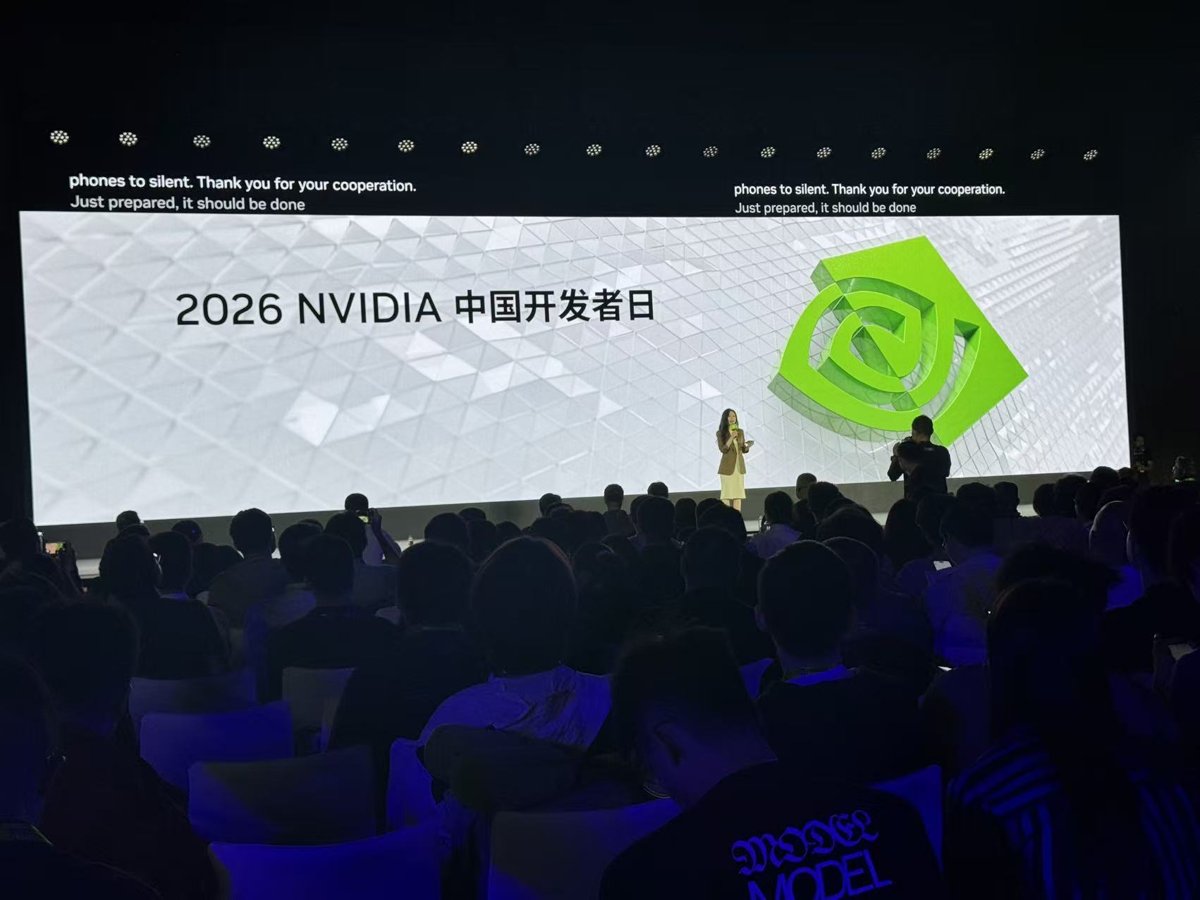
The opening session of NVIDIA China Developer Day 2026 in Suzhou. Photo: Cool Space.
The event at a glance
According to the official event page, the program was split across two days: a hands-on training and certification day on October 15, and a main forum plus technical tracks on October 16. Hackathon finals and certification exams ran across both days.[1]
| Day | Format | Focus |
|---|---|---|
| October 15 | Hands-on training (NVIDIA Deep Learning Institute) | Robotics simulation, large-scale AI inference deployment, secure agents, physical AI |
| October 15 and 16 | Certification exams | Four Associate-level exams, including AI Infrastructure and Operations |
| October 16, morning | Main forum | Welcome remarks, world models, open-source AI ecosystem, roundtable |
| October 16, afternoon | Four technical tracks | LLM training and inference, open models and runtimes, physical AI and robotics, AI infrastructure |
Hands-on training and certification
The training day was built around practical sessions rather than slideware. Free hands-on courses covered topics such as Isaac simulation and robotics workflows, large-scale inference deployment and optimization, and building secure agents.[1]
For infrastructure teams, one detail stands out: the certification list included an AI Infrastructure and Operations exam. That is a useful signal that operating AI clusters is now treated as its own discipline, alongside model development.
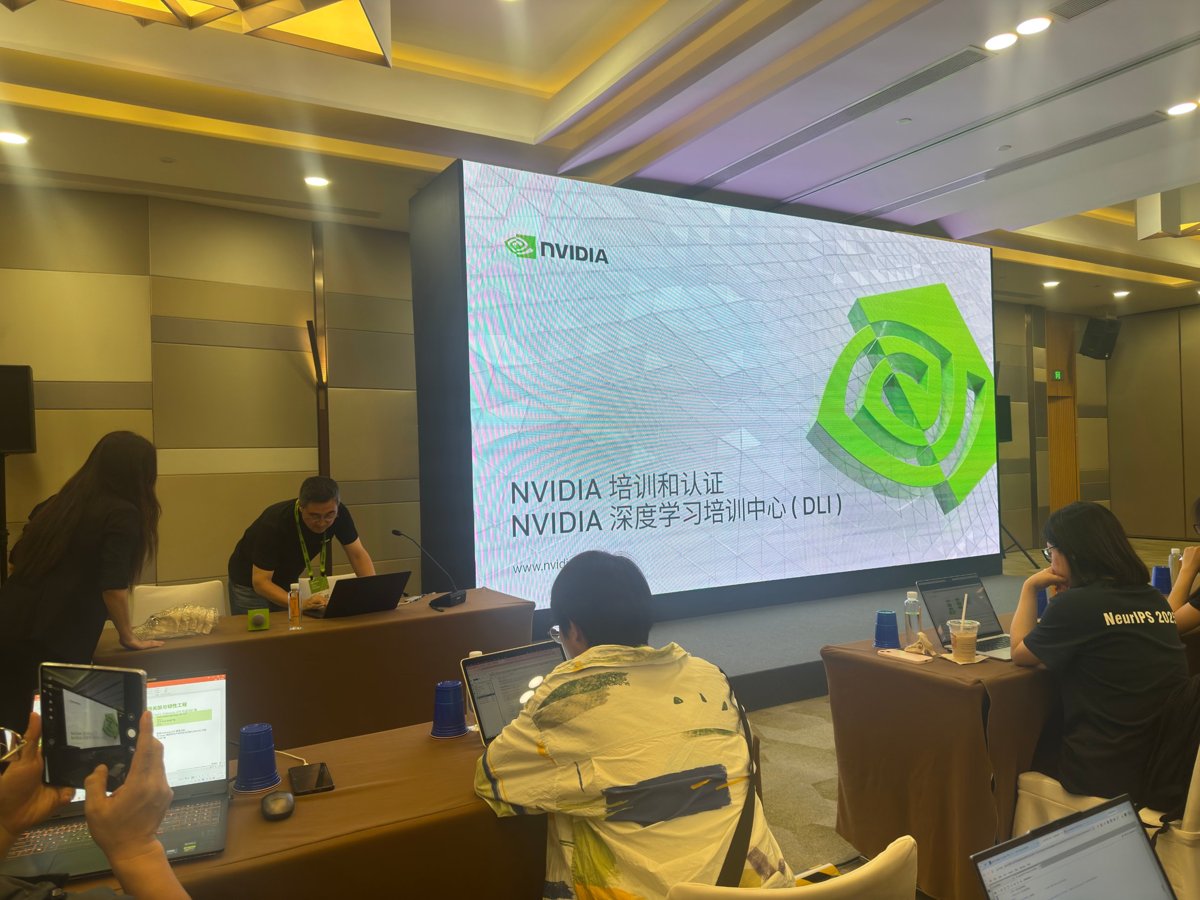
A training and certification session in progress. Photo: Cool Space.
The main forum
The main forum opened with welcome remarks from NVIDIA executives, followed by talks on Cosmos and world models, and on NVIDIA and the open-source AI ecosystem. A roundtable on open AI stacks closed the morning, and the hackathon finals and developer awards followed.[1]
The theme running through the program was breadth: language models, open models, physical AI and agents, all on the same accelerated platforms. For data center designers the practical reading is simple. More workload types on shared GPU clusters means more sustained, high-utilization compute per rack.
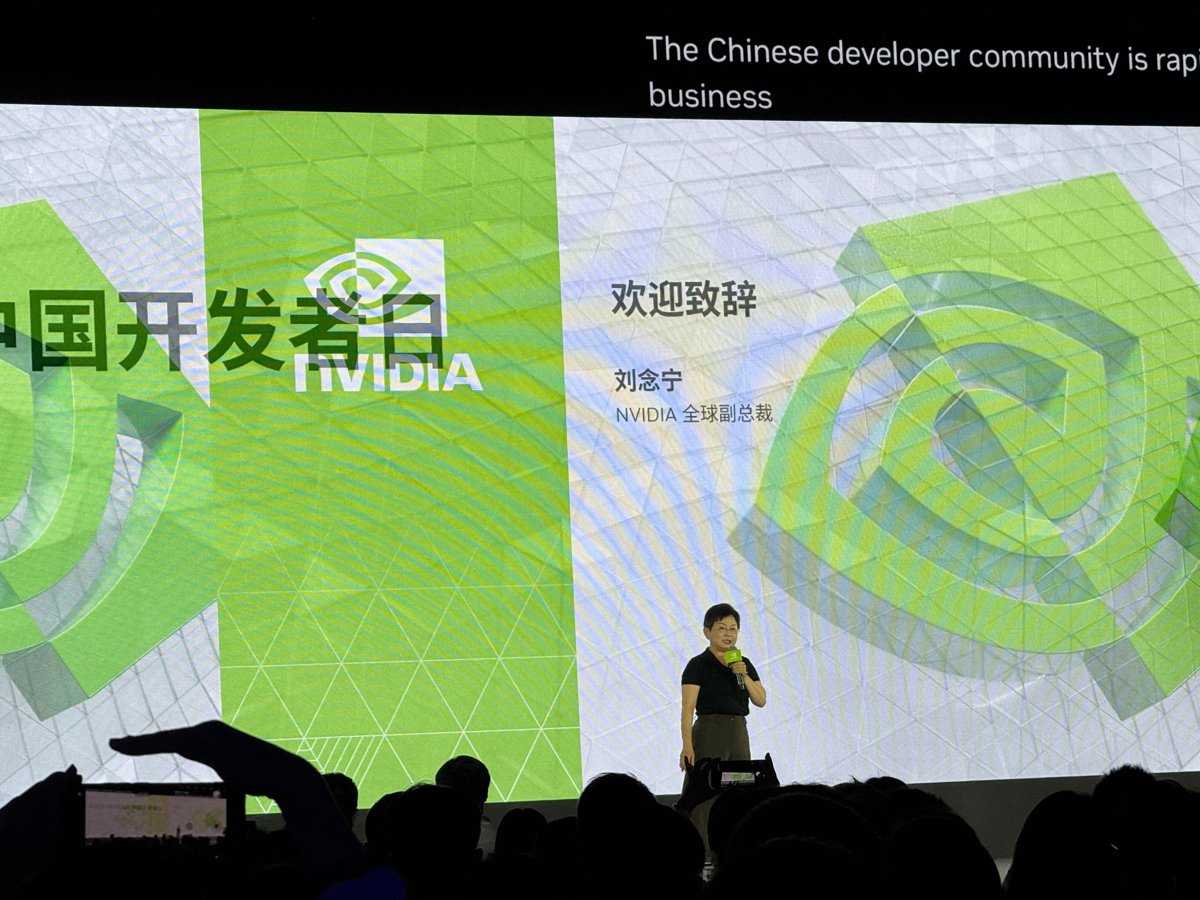
Welcome remarks at the main forum. Photo: Cool Space.
Four technical tracks, including AI infrastructure
The afternoon of October 16 was divided into four parallel tracks:
- LLM training and inference: large-scale training and serving topics, including agent inference infrastructure.
- Open models and runtimes: open-weight models and serving frameworks.
- Physical AI and robotics: simulation, world models and robotics pipelines.
- AI infrastructure: the systems layer that keeps clusters running.
We did not draw any cooling-specific claims from the published agenda, and we do not attribute any to the speakers. The point is the direction of travel: inference and agent workloads are moving into production, and production workloads run around the clock.
Developer night
The event closed with a developer night. Ken was photographed on stage with an NVIDIA representative, holding a GeForce RTX 5080 graphics card. It was a light moment at the end of two dense days, and a good reminder that this community spans hobbyists, researchers and enterprise teams.
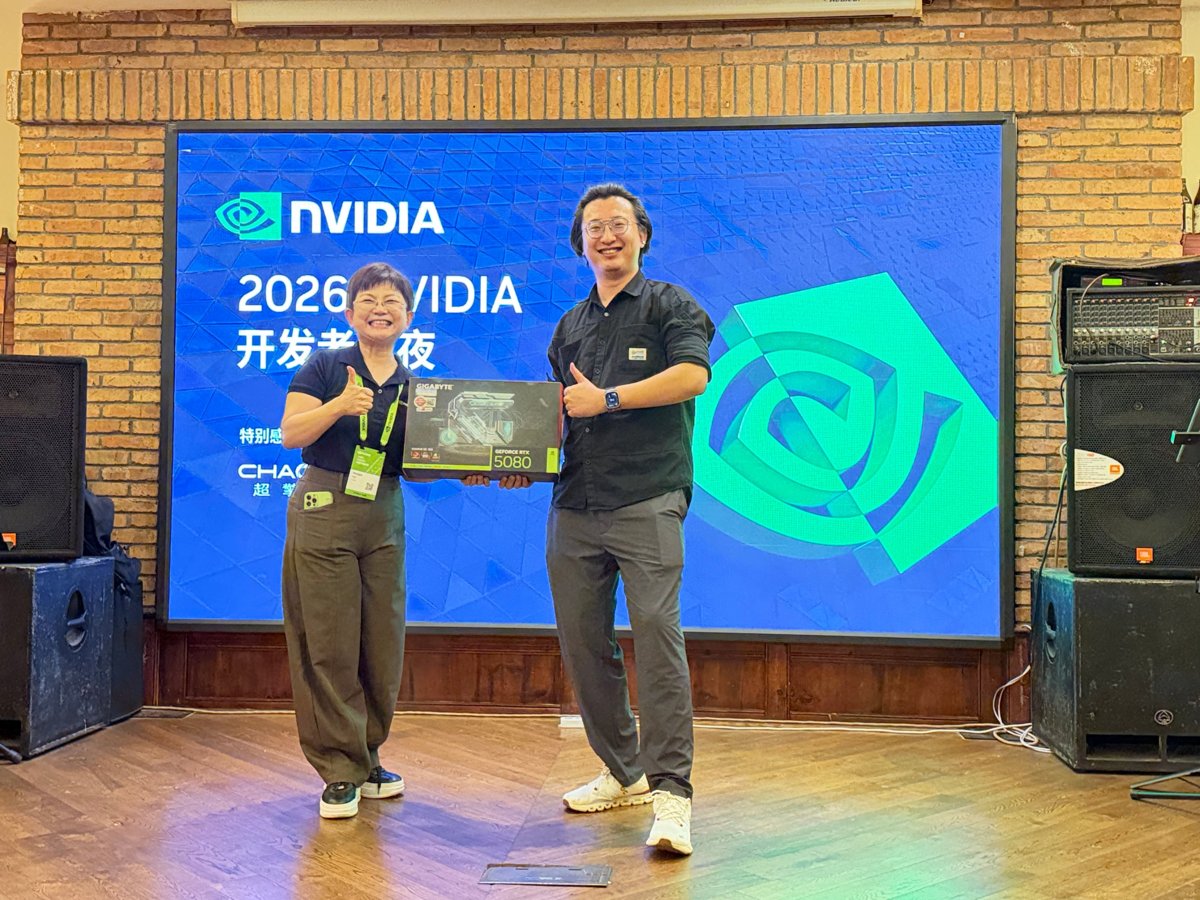
Cool Space CTO Ken Yan at the developer night. Photo: Cool Space.
At the venue photo wall. Photo: Cool Space.
What this means for liquid cooling infrastructure
Developer conferences are not cooling conferences, but they show where compute demand is going. From where we sit, three points matter for infrastructure planning.
- Utilization is rising. Production inference and agent workloads keep accelerators busy for long periods, so cooling must hold steady under sustained load, not only at peak.
- Density keeps climbing. Our earlier piece on rack density from 10 kW to 100 kW explains why air alone runs out of headroom as racks grow.
- Architecture choices come early. Decisions such as centralized versus distributed CDU architecture are easier to make before the first rack is ordered than after.
If you are new to the topic, start with how a coolant distribution unit works and our direct-to-chip cooling guide.
Planning capacity for a GPU cluster? Talk to a liquid cooling engineer about your project.
Conclusion
NVIDIA China Developer Day 2026 showed a developer community moving quickly across language models, open models, physical AI and agents, with infrastructure treated as a topic in its own right. For Cool Space, being in the room is part of designing liquid-cooled infrastructure that matches what AI teams will actually run. Our CoolBase prefabricated modular infrastructure and project-specific engineering support are designed around that reality.
Photos were taken by the Cool Space team. NVIDIA and its logo are trademarks of NVIDIA Corporation; Cool Space is not affiliated with NVIDIA.
References
- NVIDIA: China Developer Day official event page (agenda, dates and venue)
- KAD: NVIDIA China Developer Day 2026, Physical AI and Open Models (secondary coverage)
Frequently asked questions
When and where was NVIDIA China Developer Day 2026?
It took place on October 15 and 16, 2026, at the Suzhou Jinji Lake International Convention Center in Suzhou, China, according to NVIDIA's official event page.
What was on the agenda?
The program included hands-on training, certification exams, hackathon finals, a main forum and four technical tracks covering LLM training and inference, open models and runtimes, physical AI and robotics, and AI infrastructure.
Why did Cool Space attend?
Cool Space designs liquid cooling infrastructure for AI data centers. Following how AI workloads evolve helps our engineers anticipate rack power, heat density and cooling requirements.
Does Cool Space partner with NVIDIA?
No partnership is implied by this article. Cool Space attended as an event visitor, and NVIDIA names and logos belong to NVIDIA Corporation.