Designing Liquid-Cooled High-Density Compute Data Center Infrastructure for Extreme Environments
- Share
- Issue Time
- Apr 9,2026
Summary
This article outlines the key infrastructure considerations for high-density compute data center operators targeting non-standard sites — covering thermal management under extreme ambient conditions, power infrastructure in grid-constrained locations, logistics for containerized deployment, and the operational factors that determine whether a challenging site can be made to perform reliably at scale.
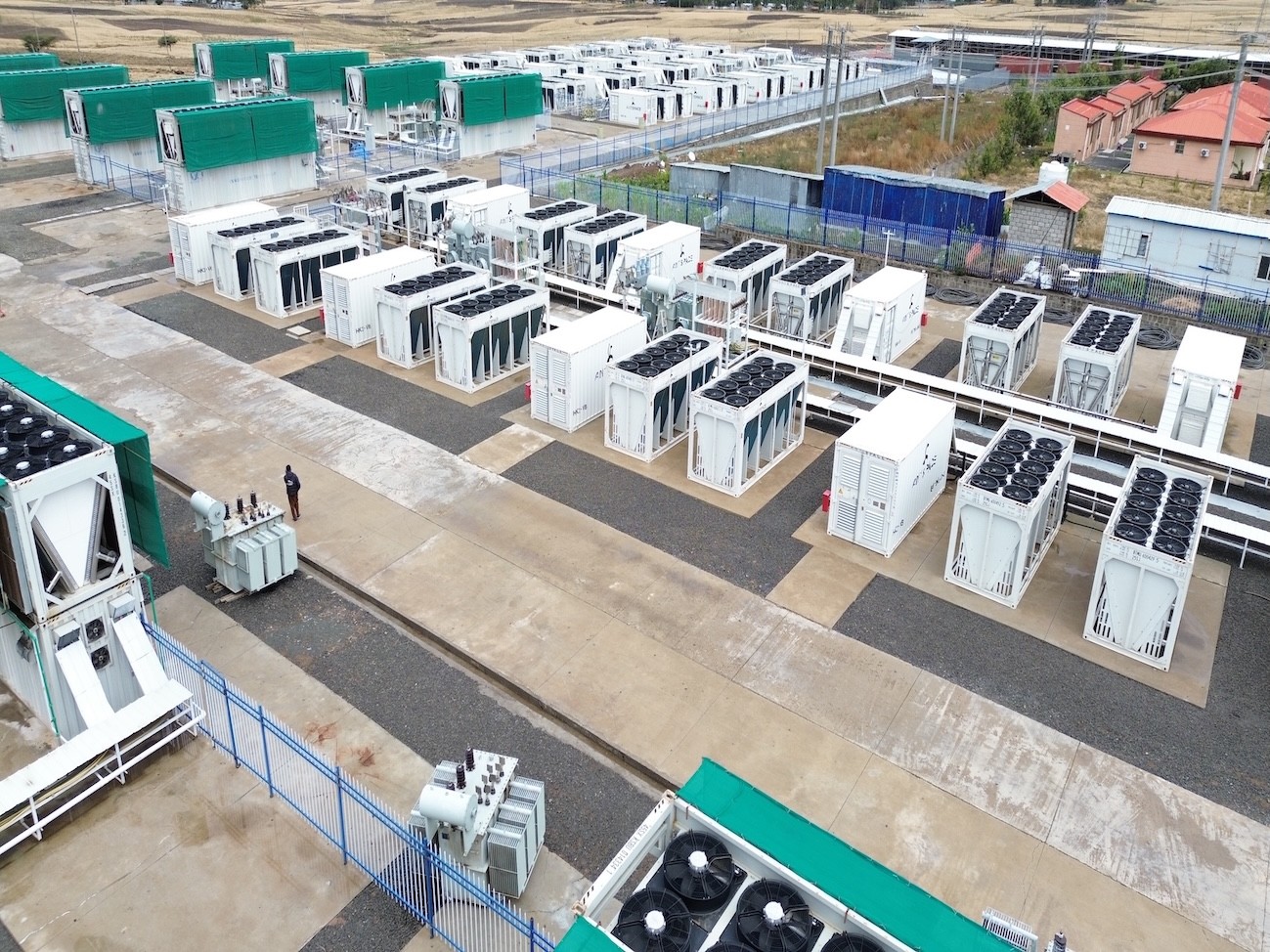
# Designing High-Density Compute Data Center Infrastructure for Extreme Environments
## Introduction
A growing share of large-scale high-density compute data center capacity is being built in locations that would have been considered marginal or impractical a decade ago: sub-Saharan Africa, equatorial Southeast Asia, remote areas of the Middle East, high-altitude sites in Central Asia, and off-grid locations adjacent to stranded or curtailed energy resources.
The economics driving this expansion are clear. Power cost is the dominant variable in compute service profitability, and the lowest-cost power is frequently found in places with limited grid infrastructure, harsh climates, or both. But accessing that power reliably requires infrastructure that is designed for the actual conditions of those environments — not adapted from specifications written for temperate, grid-connected data centers.
This article examines the engineering considerations that matter most when designing high-density compute data center infrastructure for deployment in demanding environments.
---
## The Challenge: Standard Infrastructure Assumptions Break Down
Most high-density compute data center infrastructure design begins with a set of assumptions that hold in standard operating environments: stable grid power within a moderate frequency and voltage range, ambient temperatures between 15°C and 35°C, accessible logistics and maintenance supply chains, and humidity levels within a manageable range.
In extreme deployment environments, most or all of these assumptions are invalid.
**Thermal. **Ambient temperatures in equatorial and desert regions routinely exceed 40°C during peak periods and can sustain above 45°C for extended durations. At these temperatures, air cooling efficiency degrades significantly — the temperature differential available for heat exchange narrows, and hardware thermal margins are consumed by the environment before operational heat load is even considered. Equipment rated for operation to 45°C ambient may technically remain within specification, but sustained operation at the upper limit of the thermal envelope accelerates component degradation.
**Power. **Off-grid and weak-grid environments introduce voltage instability, frequency variation, and outage frequency that grid-connected facilities in developed markets do not face. Power infrastructure for these sites must include robust conditioning, protection, and backup or transition systems adequate for the grid conditions actually present — not ideal grid conditions.
**Logistics. **Remote sites may face multi-week lead times for equipment delivery, limited access to skilled maintenance personnel locally, and restricted parts availability. Infrastructure that requires frequent intervention or specialized tools for routine maintenance is poorly suited to these environments.
**Environmental contaminants. **Desert and arid environments introduce high particulate loads. Tropical environments introduce humidity, biological fouling risk, and corrosion exposure. Coastal sites add salt air considerations. Each of these factors has implications for equipment selection, enclosure design, and maintenance protocols.
---
## Thermal Management: The Central Engineering Constraint
In high-ambient-temperature environments, thermal management is not one consideration among many — it is the primary engineering constraint around which everything else is organized.
For air-cooled infrastructure, the practical ceiling for reliable operation in extreme heat is lower than manufacturer specifications suggest. Nameplate thermal ratings represent operational limits, not design targets. Infrastructure designed to operate near those limits will experience shortened hardware lifespans, increased failure rates, and unpredictable performance variation as ambient conditions fluctuate.
Closed-loop hydro cooling fundamentally changes the thermal equation for extreme environments. By transferring heat from high-density server hardware directly into a liquid coolant circuit rather than relying on ambient air as the heat transfer medium, the system's thermal performance becomes substantially less dependent on ambient temperature. The dry cooler or heat exchanger that rejects heat to the atmosphere is engineered to handle a defined thermal load across the expected ambient temperature range — including high-temperature design days — with performance that degrades gradually rather than precipitously.
For a high-density compute data center in a region with sustained 45°C ambient conditions, the difference between a well-designed hydro cooling system and an air cooling configuration is not marginal. It is the difference between infrastructure that can sustain full-load operation year-round and infrastructure that must be derated, throttled, or shut down during peak temperature periods to protect hardware.
Container-integrated hydro cooling systems — where the cooling circuit, dry cooler, power distribution, and enclosure are engineered as a single unit — simplify deployment in remote environments by reducing the number of independent systems that must be integrated on site. The container arrives as a functional unit; commissioning involves connecting power, coolant supply (in relevant configurations), and communications infrastructure rather than assembling a facility from components.
---
## Power Infrastructure Considerations
High-density server hardware is sensitive to power quality. Voltage transients, frequency deviations, and unplanned outages can cause hardware resets, data corruption in control systems, and — in severe cases — equipment damage.
For off-grid or weak-grid deployments, power infrastructure design must address:
**Voltage regulation and conditioning. **Where grid voltage is unstable or supply infrastructure is aged, power conditioning between the utility connection point and server hardware is necessary. The appropriate solution depends on the specific grid characteristics of the site and the sensitivity of the hardware being deployed.
**Overload and surge protection. **Lightning strike exposure is elevated in many tropical and equatorial environments. Surge protection at the facility level and at individual equipment connections is a standard requirement.
**Transition and backup power. **For sites where grid outages are frequent, the cost of unplanned downtime — in terms of both lost compute service revenue and hardware restart cycles — may justify investment in diesel backup generation or battery energy storage capable of bridging outage events. The economic case depends on outage frequency and duration, power cost, and the compute service pricing environment.
**Generator integration. **At fully off-grid sites powered by diesel or gas generation, power infrastructure design must account for generator output characteristics, load-following capability, and the interaction between generator governor response and the dynamic load profile of a large server fleet.
---
## Logistics and Commissioning
Containerized high-density compute data center infrastructure offers specific advantages in remote deployment contexts. ISO-standard containers move on standard freight infrastructure — road, rail, and sea — without requiring specialized heavy transport. For remote sites accessible only by road, container dimensions and weights can be matched to available transport options.
Commissioning complexity is a practical concern for remote sites where bringing in a large technical team represents a significant cost. Purpose-built hydro-cooling container systems designed for minimal on-site integration — where the container arrives with cooling, power distribution, and monitoring pre-installed and tested — can be commissioned by a small team in 72 hours under normal conditions. This is meaningfully different from deploying and integrating individual system components in the field.
For operators building multi-container sites, the modular nature of containerized infrastructure enables phased deployment: initial containers can be operational while subsequent units are in transit, allowing revenue generation to begin before the site reaches full capacity.
---
## Operational Maintenance in Remote Environments
The maintenance program for a remote high-density compute data center must be designed around the realistic availability of personnel and parts — not around the assumption that a technician can be on-site within hours.
This has implications for equipment selection and system design:
**Remote monitoring. **Comprehensive telemetry — hardware temperatures, power consumption, cooling circuit parameters, individual server status — enables early identification of developing issues before they become failures. Remote monitoring reduces the frequency of site visits required and allows maintenance to be planned rather than reactive.
**Redundancy in critical systems. **For cooling circuits and power distribution, N+1 redundancy in pumps, fans, and control systems allows the site to continue operating if a single component fails, with maintenance scheduled at the next planned visit rather than immediately.
**Modular and field-serviceable components. **Equipment that can be serviced or replaced by operators with general technical skills, using tools available locally, is substantially more maintainable in remote environments than equipment requiring specialized tooling or factory-trained technicians.
---
## Why It Matters for Operators
The economic case for developing infrastructure in challenging environments is frequently compelling — low-cost power, long-term offtake agreements, and limited competition for site access can produce favorable economics relative to more accessible locations.
Realizing that economic potential requires infrastructure that actually performs in those conditions. The cost of infrastructure failure, unplanned downtime, or chronic underperformance in a remote environment — where logistics are expensive and response times are slow — is substantially higher than it would be in a conventional hosting facility.
Infrastructure designed for real-world deployment conditions, rather than ideal conditions, is not a premium — it is a requirement for operations where the consequences of underperformance are material.
---
## Conclusion
Extreme environments represent some of the most attractive opportunities in large-scale high-density compute data centers, precisely because they are challenging. Low-cost, often stranded power; limited competition; and long-term site agreements are all more accessible in locations that standard infrastructure cannot reliably serve.
The engineering requirements for these deployments are well understood: thermal management that performs at high ambient temperatures, power infrastructure appropriate for the actual grid conditions present, logistics-optimized deployment, and operational design suited to remote maintenance realities.
CoolSpace's hydro-cooling container systems have been deployed and operated in exactly these conditions, including large-scale high-density compute data centers in sub-Saharan Africa. The engineering decisions built into those systems reflect operational experience in demanding environments, not just design-stage assumptions.
For operators evaluating infrastructure for non-standard deployment sites, we welcome direct technical discussions. Contact our engineering team or explore our deployment documentation to understand how our systems are designed for real-world conditions.